

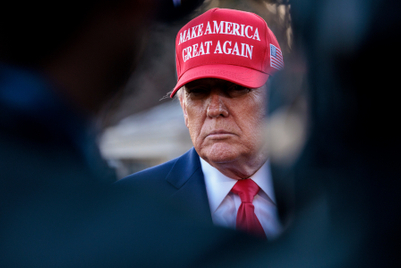
Whatever your position on Donald Trump, it's fair to say the man is a veritable fount of creative inspiration. Back in February, his bluster about building a boundary between Mexico and the US led Diesel to launch a campaign called ‘Make love not walls’. Trump’s intolerance was a chance for the brand to mark itself out as a supporter of inclusivity in characteristically colourful style.
While Trump is a source of bemusement in Japan, his wall idea holds a bit less meaning than in more multicultural societies. But the country does have figurative walls of its own, and as Japan is Diesel’s largest market, the company opted to create a fully localized interpretation of the theme.
In particular, while Japan is a world leader in terms of fashion, youth and subculture, society as a whole has been slow to open up to the LGBT community. ‘The walls’ urges a removal of the barriers that prevent open expression of love and affection between people of all sexual orientations. It was developed by Geometry Global in Tokyo, with further creative input from a collaboration between production houses Dictionary Films and AOI Pro, and Tokyo-based director Connor Gilhooly.
The video was shot in Shibuya, the first Tokyo ward to legally recognize same-sex partnerships. It conveys the beauty of love, and the act of love, through a combination of not-so-subtle but imaginative imagery, ranging from rainbow-coloured baseball bats to mushrooms, devil masks and a life-sized inflatable tank. (The tank first appeared in the February film, blowing a heart-shaped hole through the wall.) Viewers may also spot a wind-up toy, which Dictionary’s Peter Grasse apparently procured specially in an “adult supermarket” in Akihabara.
Campaign’s view: Diesel is a brand with a licence to be provocative (it does advertise on Pornhub, after all), and both this and the earlier film fit well with what it stands for. In both cases, the message comes across strongly. But we prefer the Tokyo effort, for its layers and its sense of fun. It also appears that the work has benefited from a good degree of creative involvement from the production side. This film aside, we hope to see more brands in Japan champion inclusivity in a way that is unique to them.


.jpg&h=268&w=401&q=100&v=20250320&c=1)
.jpg&h=268&w=401&q=100&v=20250320&c=1)

.jpg&h=268&w=401&q=100&v=20250320&c=1)
.jpg&h=268&w=401&q=100&v=20250320&c=1)